

The Ultimate Guide to Clothing Size Label: A Manufacturer's Perspective
Deciding on the size of your clothing label is more than an aesthetic choice—it’s a critical detail that impacts your brand image, legal compliance, and the perceived quality of the garment. As part of Custom Clothing Labels, the right size communicates professionalism and attention to detail.
Getting it wrong can make your clothes feel cheap, frustrate customers, or even damage the garment itself. The ideal label size balances your brand requirements, the type of garment and fabric, and the manufacturing process. This seemingly small detail speaks volumes about your brand and the quality of your offering.
Why Your Label Size Is a Critical Brand and Garment Decision
As artists with 10 years of experience, we know that’s really important. Size is a number that determines how people perceive your brand, whether you’re in compliance with the law, and how comfortable you feel in your clothes.
First Impressions: Brand Perception and Aesthetics
Your label is among the first things a customer feels from you. It should be able to stand up to the quality of his clothing.
An overly large label can look ungainly and detract from the design. If it’s too small, people may not want to read it; after all if you don’t care about the details of your product, why should they?
- Proportionality is key: The label size should fit well with the garment’s size and where it’s placed.
- Brand identity: A big, bold label might work for outdoor gear, while a small, simple label is better for underwear.
Staying Compliant: Legal and Retail Requirements
Laws dictate your label has to be a certain size. Information about materials, origin and care must be easy to read.
There are specific rules for clothing labels from the U.S. Federal Trade Commission. This information must also be easy to find, and read, thanks to the FTC’s labeling requirements(which is something that will determine how small your label can actually be).
- Readability: Font size and clarity matter a lot.
- Required Information: If you don’t include all needed info clearly, you could have legal problems and stores might not sell your clothes.
The Silent Factor: Garment Integrity and Wearer Comfort
The wrong label can destroy your clothes and offend your customers. A big, stiff label can cause a drapey fabric like silk to bunch up or hand wrong.
We had a client who desired, at one point, a stiff woven label for stretchy workout leggings. The label area was tested and tight, made it difficult to move. We solved this by switching to a stretchy heat transfer label, maintaining comfort and brand look.
- Fabric Damage: A heavy label can pull on light fabrics or leave marks on technical materials.
- Customer Experience: Scratchy, sharp, or badly placed labels are common complaints and can make someone stop wearing your clothes.

Freight discount

Free Full Creative Proof For Approval

Free Digital Mock Ups

Custom packaging
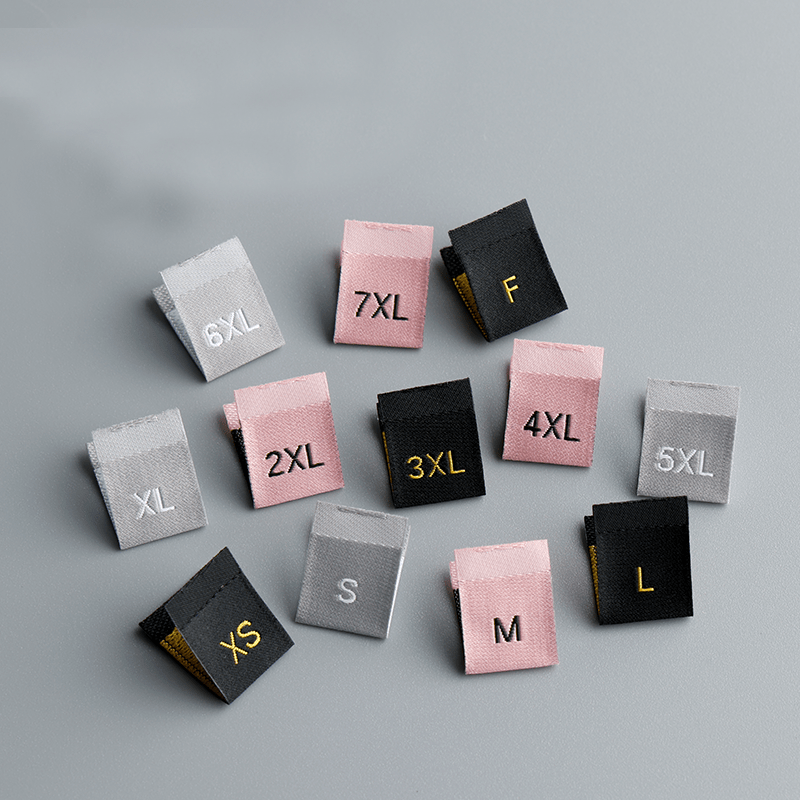
Label Size Product Gallery


A Manufacturer's Method: How to Accurately Measure for a Perfect Fit
Don’t guess. A defined measurement process ensures the final label fits perfectly for an optimal look and can be seamlessly integrated within the design of the garment.
Essential Tools for the Job
You need simple tools:
- Flexible measuring tape
- Paper
- Pen
- Scissors
Step-by-Step Measurement Guide
Follow these simple steps for a perfect fit every time.
Step 1: Identify the Placement
Decide exactly where the label will go (like the back of the neck, side seam, or bottom hem).
Step 2: Measure the Available Area
Use your measuring tape to find the flat area where the label will sit. Write down the maximum width and height.
Step 3: Create a Paper Mock-up
Cut paper to the exact size you measured. This physical template is crucial.
Step 4: Test the Mock-up on the Garment
Place your paper on the garment where the label will go. Check how it looks. Make sure the edges don’t fall into seams or curved areas where it might bunch up.
Step 5: Account for a “Safety Margin”
From your final mock-up size, subtract 1/8 inch (about 3mm) from both width and height. This buffer ensures the label doesn’t look cramped or get caught in stitching, especially with hand sewing.
Size Label Customization Options for All Brand Requirements
For apparel brands, we provide customized size label solutions designed to meet your specific branding and sizing requirements.
With multiple size label formats available, including woven and heat transfer options, along with flexible sizing systems and placement customization, we help ensure clarity, consistency, and comfort across your Streetwear collections.
Our objective is to support brands in delivering size labels that align with their product standards and enhance overall brand presentation. As an experienced Streetwear manufacturer, we offer comprehensive size label customization options to accommodate a wide range of Streetwear Products.
Decoding Label Types: How Craftsmanship Dictates Size
How your label is made affects its possible size, detail, and feel. Many brands miss this important point.
For woven labels with detailed logos, we suggest a minimum width of 1.5 inches to ensure the design looks sharp. Understanding the craft helps you make better choices.
Label Type | Common Size Range (Inches) | Pros | Cons | Best For… |
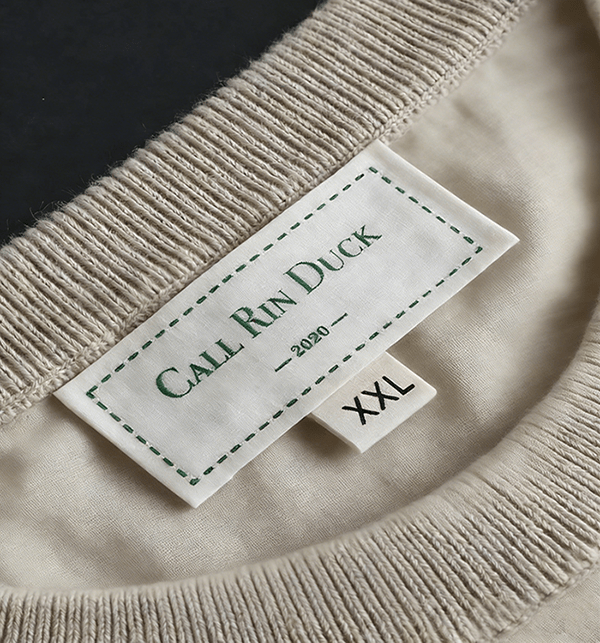
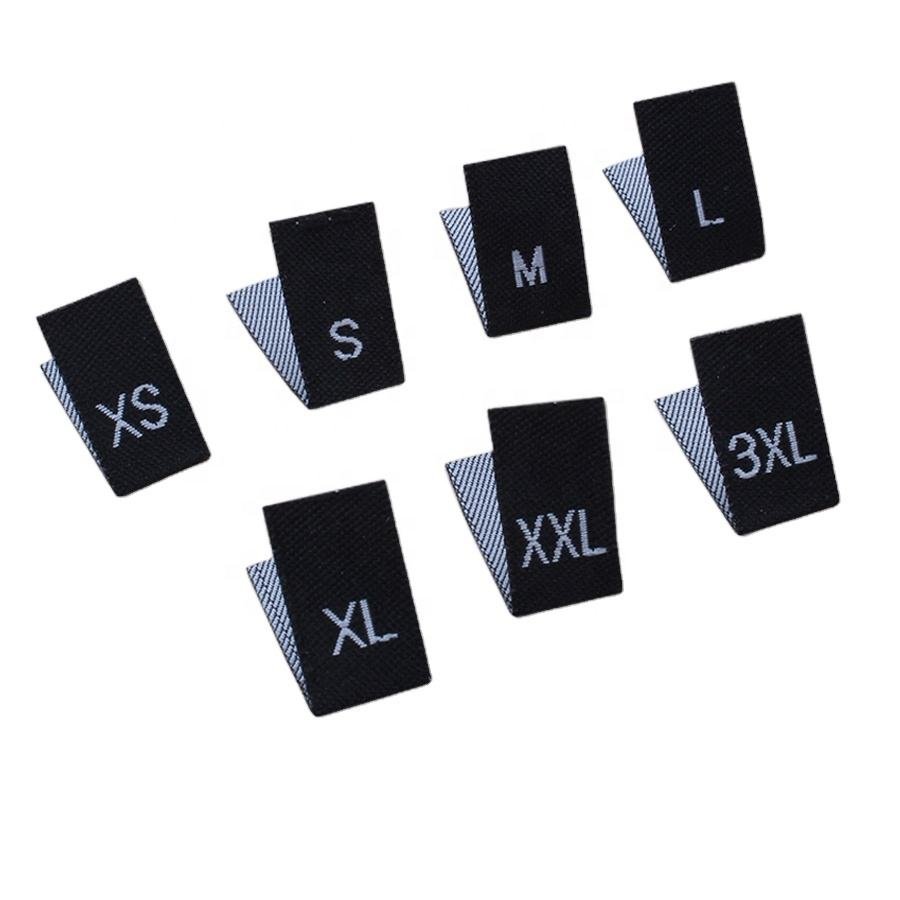
Woven Labels | 1″ x 2″ to 2″ x 3″ | High-end feel, extremely durable, classic look. | Less sharp detail on tiny text/logos, higher initial cost. | Outerwear, denim, premium basics, formal wear. |
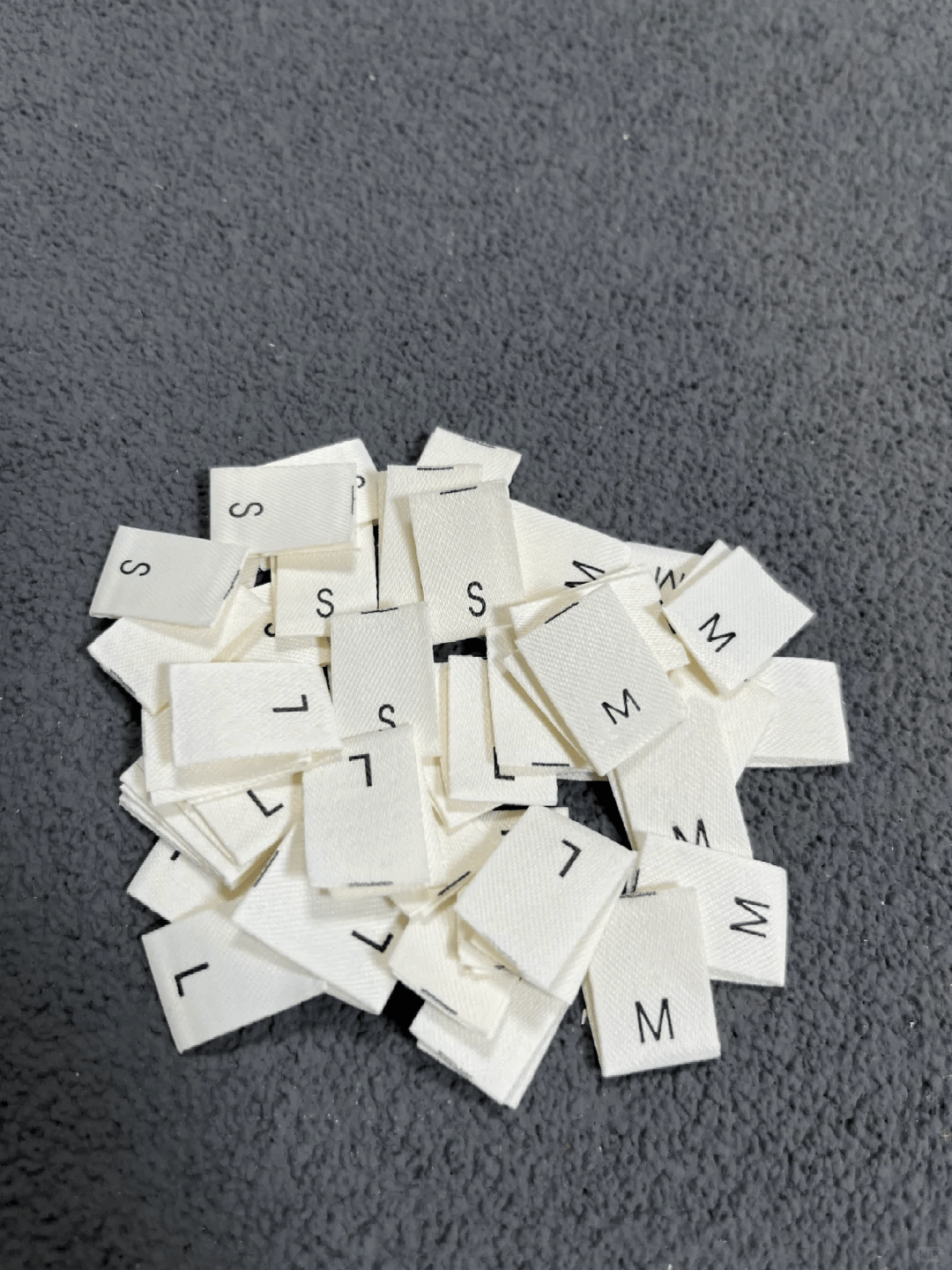
Printed Labels | Highly flexible (e.g., 0.5″ x 1″ to 3″ x 4″) | Excellent for fine detail and complex graphics, soft, cost-effective. | Ink can fade after many washes, less perceived luxury than woven. | T-shirts, baby clothes, intimate apparel. |
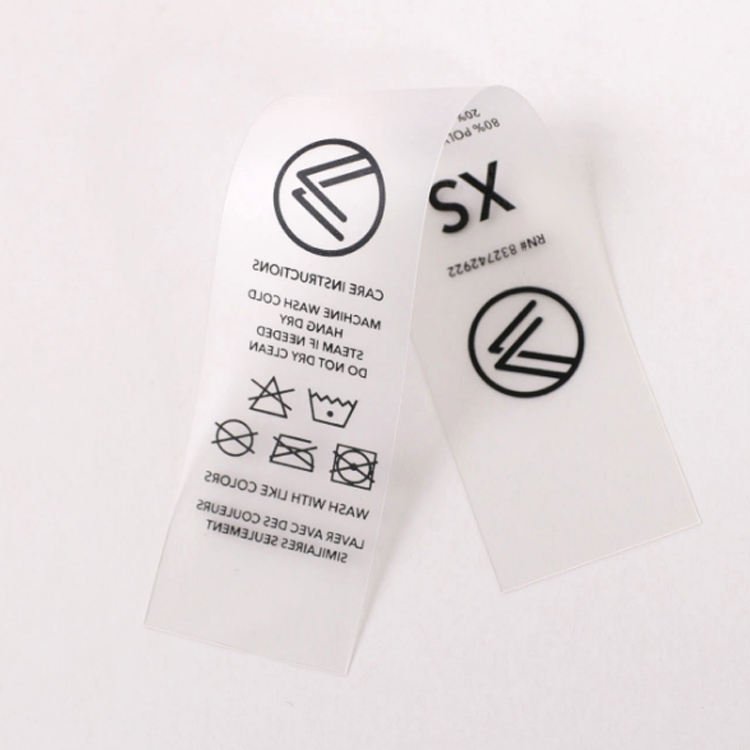
Heat Transfer Labels | Highly flexible | “Tag-less” for maximum comfort, great for performance wear, works on sheer fabrics. | Not suitable for all fabrics (e.g., loose knits, fleece), durability depends on application quality. | Sportswear, t-shirts, children’s wear, lingerie. |
Woven labels offer a premium, long-lasting finish but need to be slightly larger to show complex details.
Printed labels are very flexible in size and detail, making them great for care labels with lots of info or soft garments where comfort matters most.
Heat transfer labels get rid of physical tags completely, giving a “tag-less” option perfect for Streetwear and clothes worn next to skin, with almost unlimited size and shape options.
Beyond the Basics: Advanced Sizing Considerations From 10 Years of Experience
True quality shows in the details. After you find your basic size, think about these expert factors to improve your choice and avoid costly mistakes.
Fabric Compatibility is Key
The label must work with the fabric, not against it.
- Stretch Fabrics: For clothes with Lycra or spandex, don’t use stiff woven labels. Choose a flexible printed satin label or, better yet, a heat transfer label that stretches with the fabric.
- Delicate Fabrics: On silk, chiffon, or lace, a small, light printed label or a carefully made small woven label is needed to prevent pulling or hurting how the fabric hangs.
- Heavy-Duty Fabrics: Strong materials like denim, canvas, or wool can handle larger, thicker woven labels that match the garment’s sturdy character.
Information Density and Readability
The amount of info you legally must include sets your label’s minimum working size. You need space for the brand, size, origin, fabric content, and care instructions.
To save space, consider using widely recognized symbols. Using international care symbols (ISO 3758:2012) can show washing, drying, and ironing instructions more compactly than words, possibly allowing for a smaller, more elegant label.
Considering The Fold: End Fold, Center Fold, or Mitre Fold?
How the label is folded and sewn into the garment affects its final visible size and the raw material size needed.
- Center Fold: A label folded in half and sewn into a seam. The design shows on both front and back. The total length is double the finished length plus seam allowance.
- End Fold: The short ends of the label are folded under and sewn on top of the garment. This means adding fold allowance to your desired width.
- Mitre Fold: The ends are folded at a 45-degree angle to create a tab for hanging. This also affects the starting dimensions.
Talk about the fold type with your manufacturer early in the design process to make sure your artwork is set up correctly.
Your Partner in Perfection: Sizing Success with Prime Streetwear Manufacturing
Choosing the right label size requires careful consideration, but you don’t have to do it alone. With a good manufacturing partner, you will be guided.
Prime Streetwear Manufacturing With 10 years of garment experience, Prime Streetwear Manufacturing assists brands in overseeing all aspects of production. We offer expert consultation from fabric sourcing to finishing, such as how you select the right label size, type for your product.
Save yourself the trouble: our combined experience can help you avoid common mistakes, so your finished garment is wonderful looking, fits well, conforms to whatever standards are in force and wears as long as possible.
Ready to bring your vision to life with perfect finishing touches? Contact us today.
Conclusion: Your Final Label Size Checklist
Your garment’s label is small but powerful for your brand’s story. Getting the size right mixes strategy, function, and looks. Before sending your designs to production, check these points.
Final Checklist Before Production:
- Have you measured the placement area accurately on the garment?
- Have you created and tested a paper mock-up on the actual garment?
- Does the size accommodate all legally required information (e.g., care instructions, origin)?
- Is the label type (woven, printed, heat transfer) compatible with your garment’s fabric?
- Does the label size and style align with your overall brand identity?
- Have you consulted with your manufacturer about the fold type and any potential production constraints?
Real feedback from customers all over the world about
Prime Streetwear Manufacturing.
Communication & Production
How to Start Working with Prime Streetwear Manufacturing?
3X Your order is triple checked by our team prior to production and before shipment
Request a Free Quote & Consultation
Hit us up for a free quote. We’ll discuss your requirements — design, quantity, timing — and put a plan in place that works.
Submit Your Custom Design & Requirements
1. Choosing Label Design
2. Selecting the right Carft for the design
3. Payment for samples
4. Sample production after determining the color, size, and accessories of the sample
Receive Sample Prototypes for Approval
1. Are the fabrics satisfactory?
2. Does the craftsmanship live up to the design?
3. Are there any changes that need to be made to the colors, sizes, and accessories?
4. Details of large orders
Bulk Production & Delivery Process
1. Payment of deposit for large orders
2. Large Order Production Progress Inquiry
3. Final payment upon completion of prodution
4. Choose the right shipping method, pay the shipping fee, ship the goods
Frequently Asked Questions
What is the standard size range for clothing labels in 2026?
Woven labels typically range from 1″x2″ to 2″x3″, while printed labels and heat transfers offer more flexibility, ranging from 0.5″x1″ to 3″x4″ depending on garment type and information requirements.
How does label size affect garment comfort and quality?
An incorrectly sized label can damage delicate fabrics, create discomfort, and affect how the garment hangs. The right label size balances brand visibility with wearer comfort.
How do I measure for the perfect label size?
Use a flexible measuring tape to determine the available area, create a paper mock-up, test it on the garment, and subtract 1/8 inch as a safety margin to ensure proper fit.
Which label type is best for Streetwear?
Heat Transfer Labels are the best label type for stretchy fabrics like streetwear (such as hoodies, joggers, and spandex-blended tees) because they stretch naturally with the fabric without pulling, warping, or causing skin irritation
Label Size Manufacturer Offer
Prime Streetwear Label Size Manufacturer was created to provide helpful service, simple streamlined ordering & eco-friendly options. A company with transparent prices & ethics, a company that aims to create good things.
Prime Streetwear Manufacturing Difference
Prime Streetwear Manufacturing was created, to provide helpful service, simple streamlined ordering & eco-friendly options. A company with transparent prices & ethics, a company who aims to create good things.
Innovative Ideas
Prime Streetwear Manufacturing is proud to be a leading partner in the promotional products + fashion industry. With unique ideas + out of the box printing methods.
We Stand Behind Our Work
Our main goal is to provide peace of mind so you can relax and have confidence that your job will come out exactly as you had imagined.
Quality Over Quantity
Prime Streetwear Manufacturing believes in quality over quantity and we want our customers to feel the same way.
Dedicated Reps
Each account receives a dedicated rep who can be reached face to face by phone or via e-mail.
Long Lasting Relationships
We value all of our clients and aim to solidify long lasting & mutually beneficial relationships.