

The Complete Guide to Heat Transfer Labels: From Concept to Application
Today’s clothing consumers want more than trendy designs—they want comfort. Even that scratchy tag sewn into the collar is being replaced by the smooth feel of tagless garments.
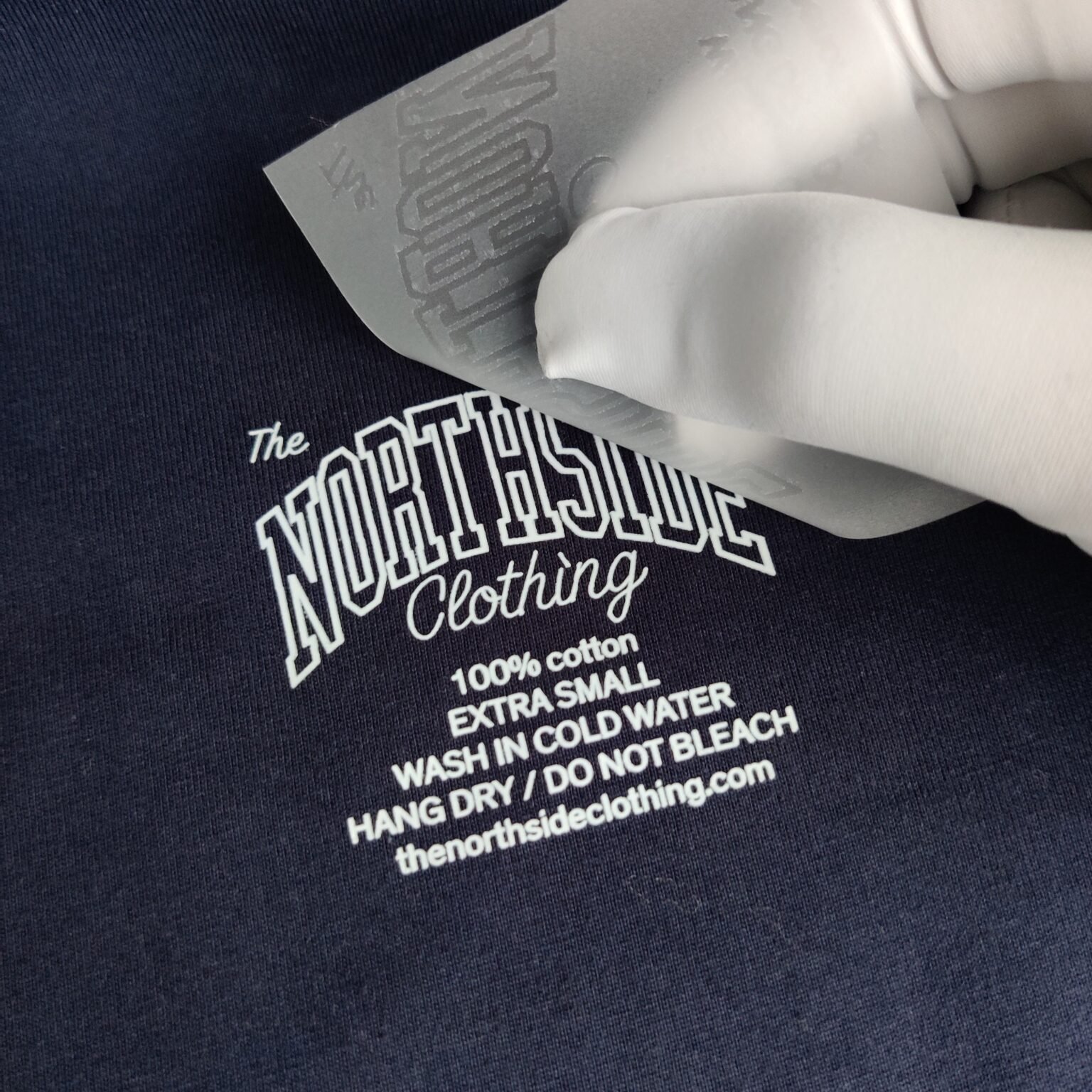
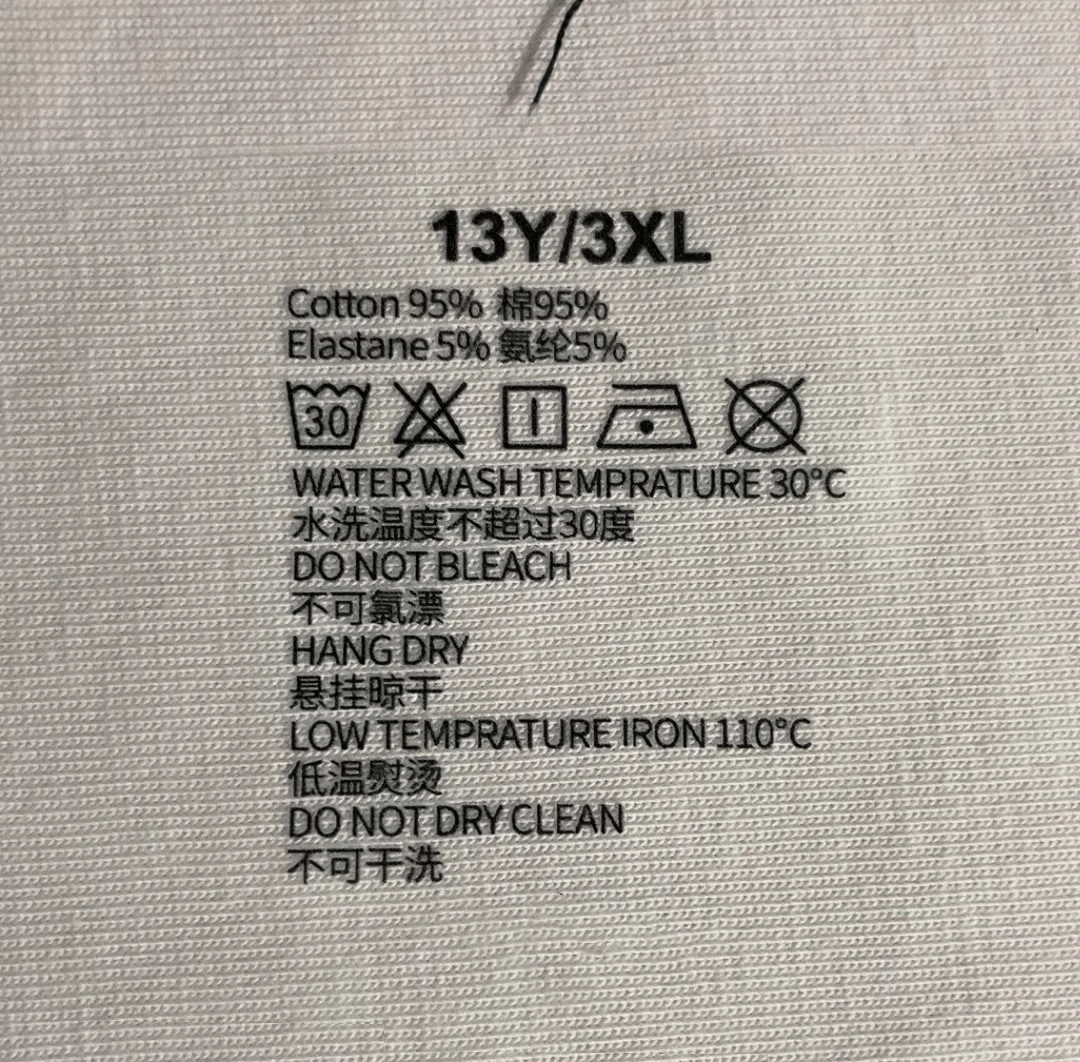
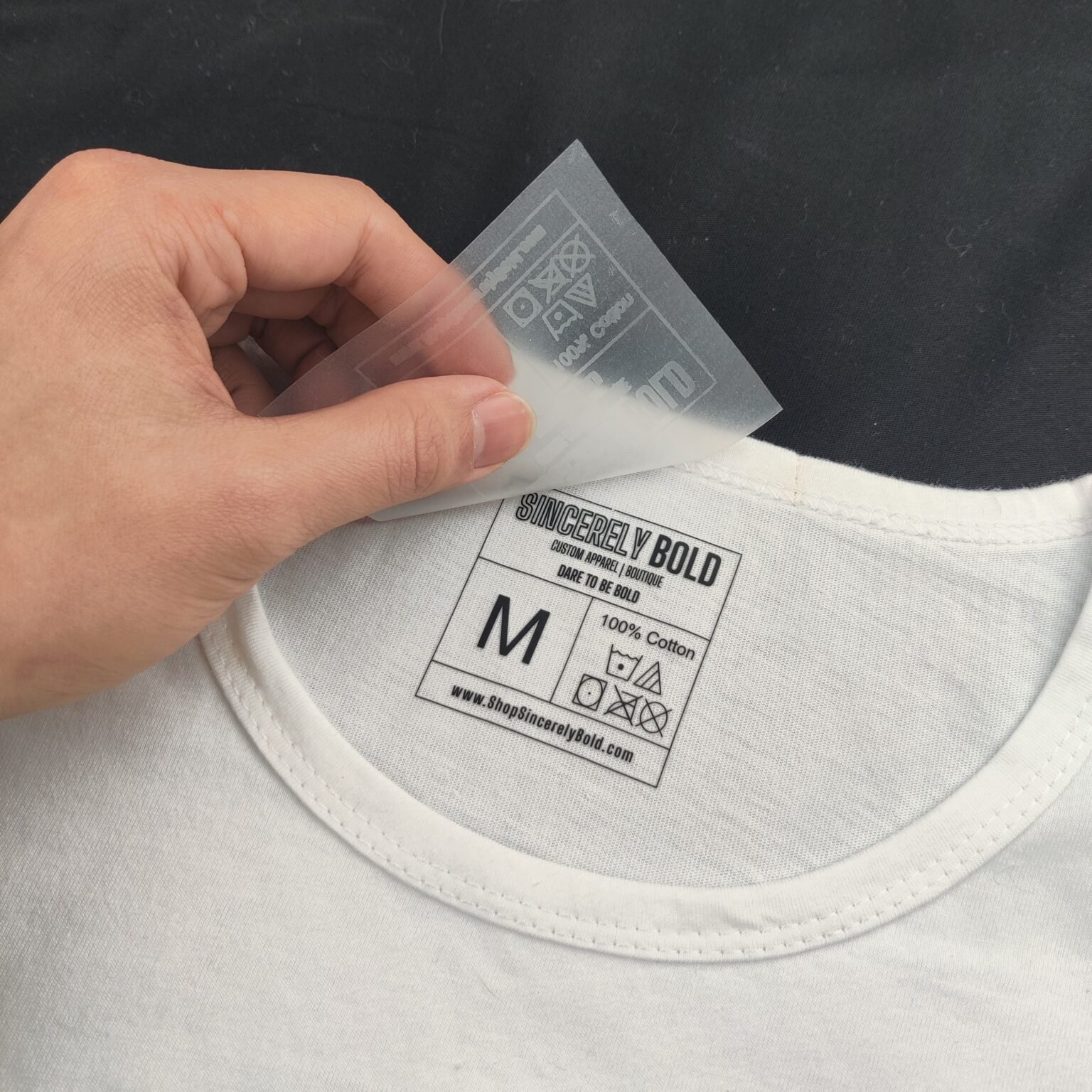
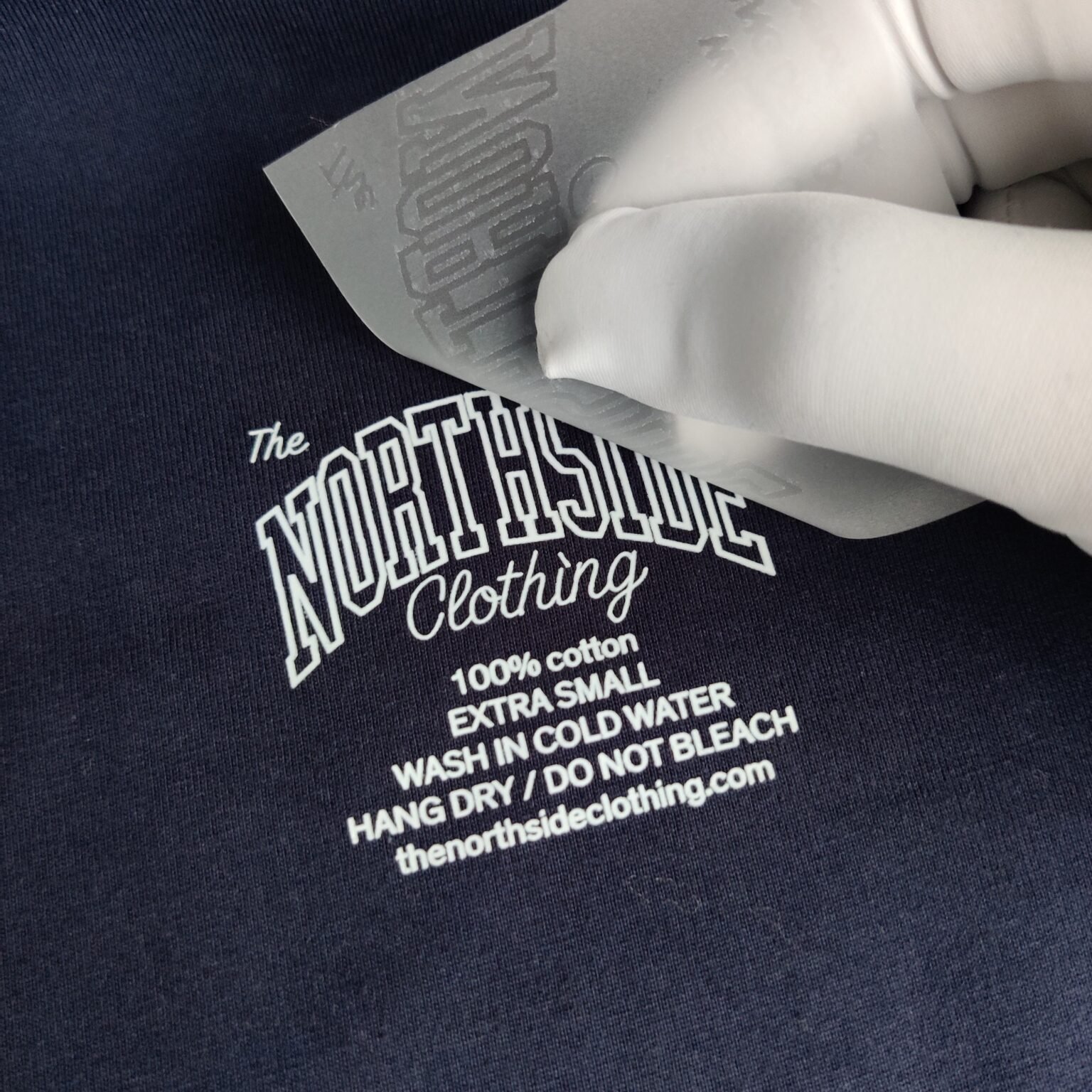
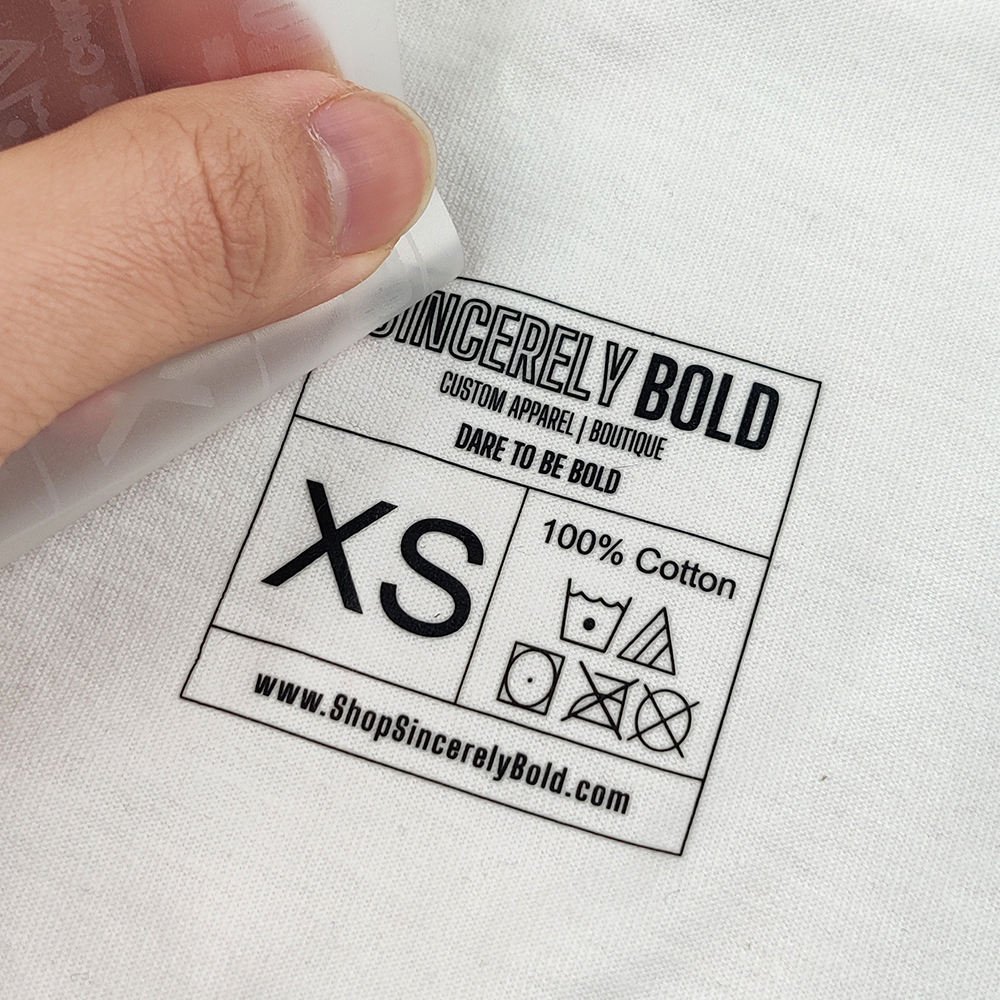
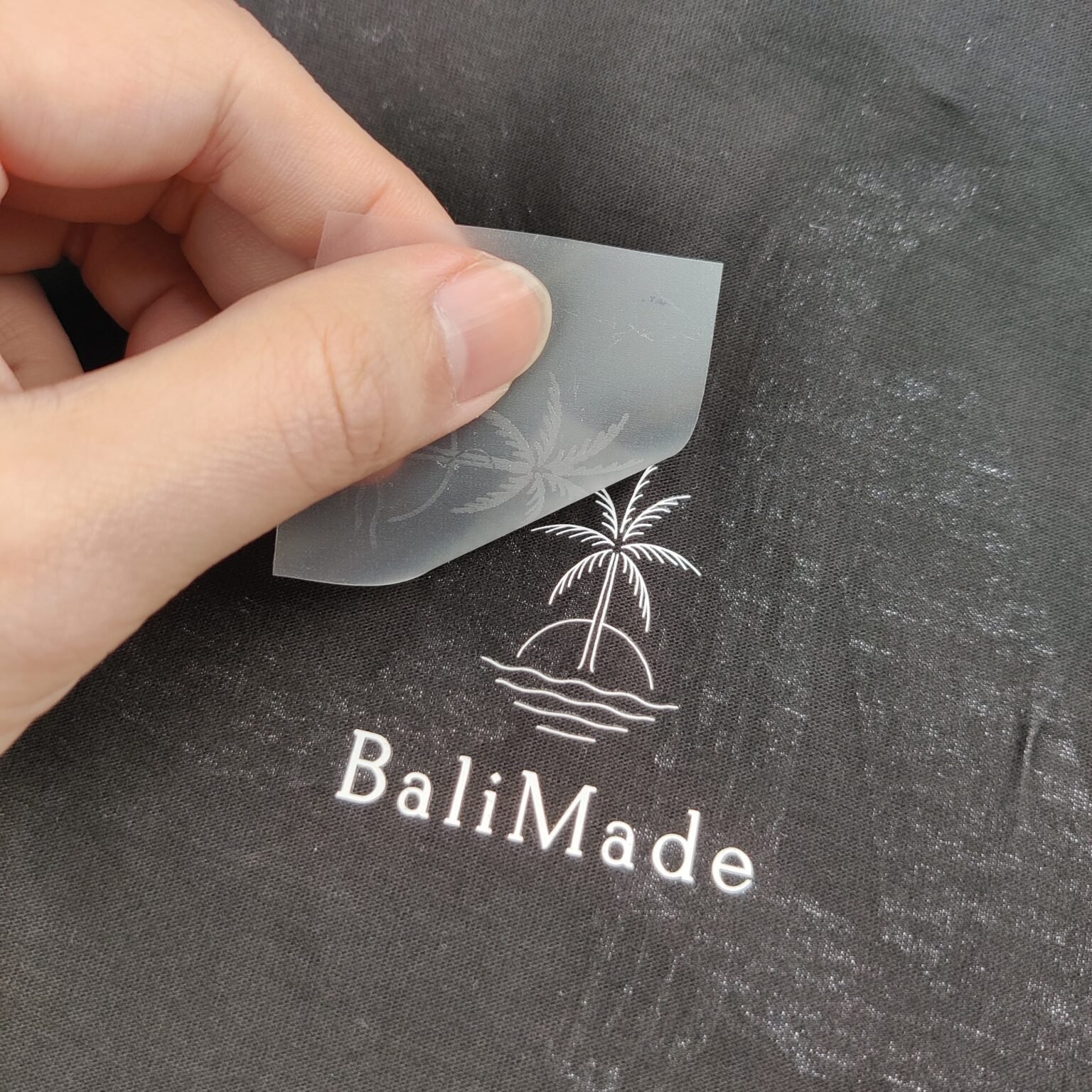
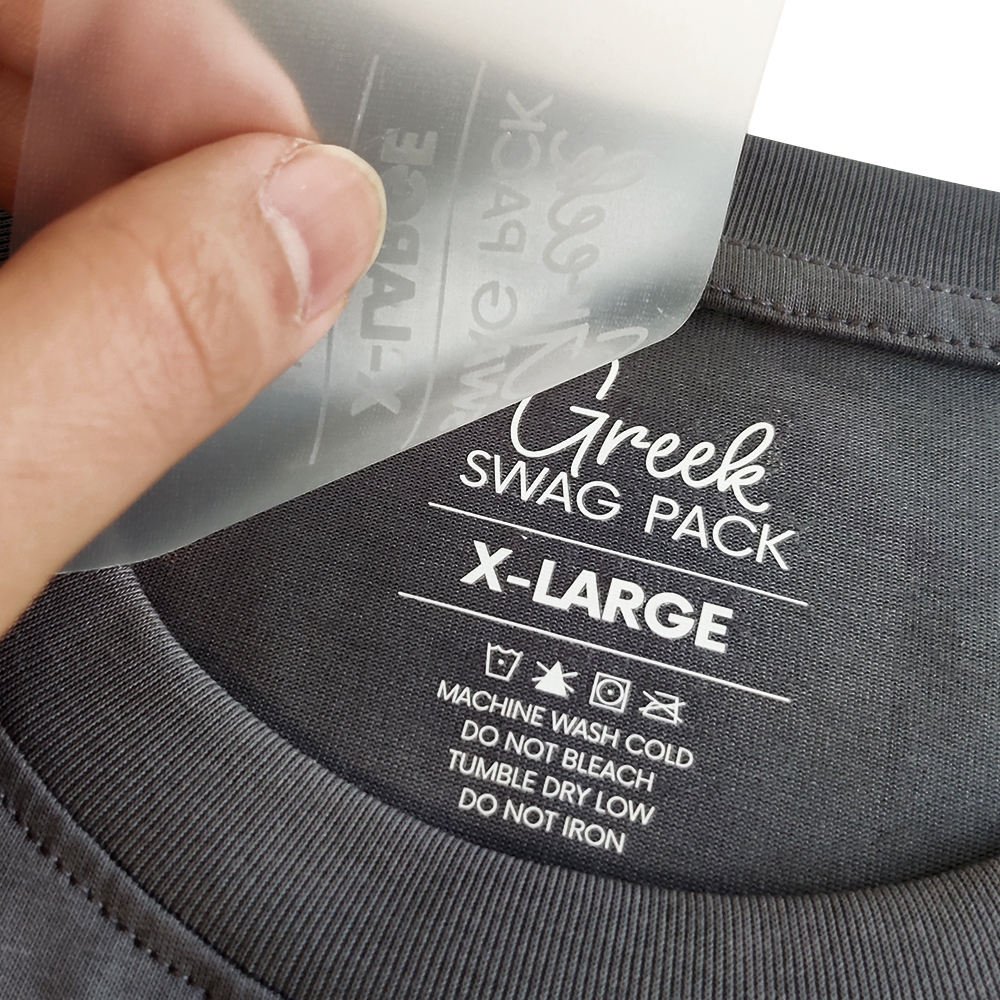
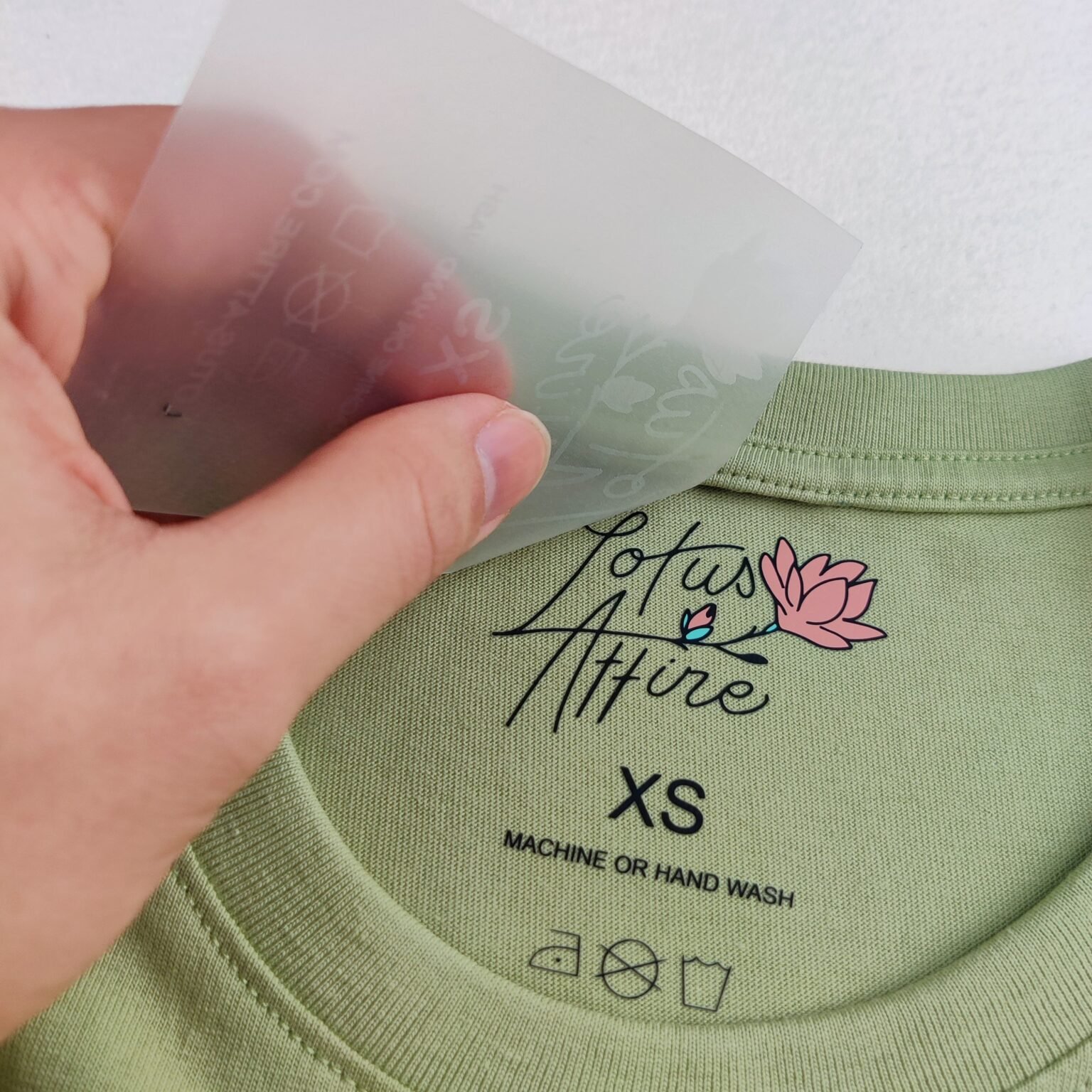
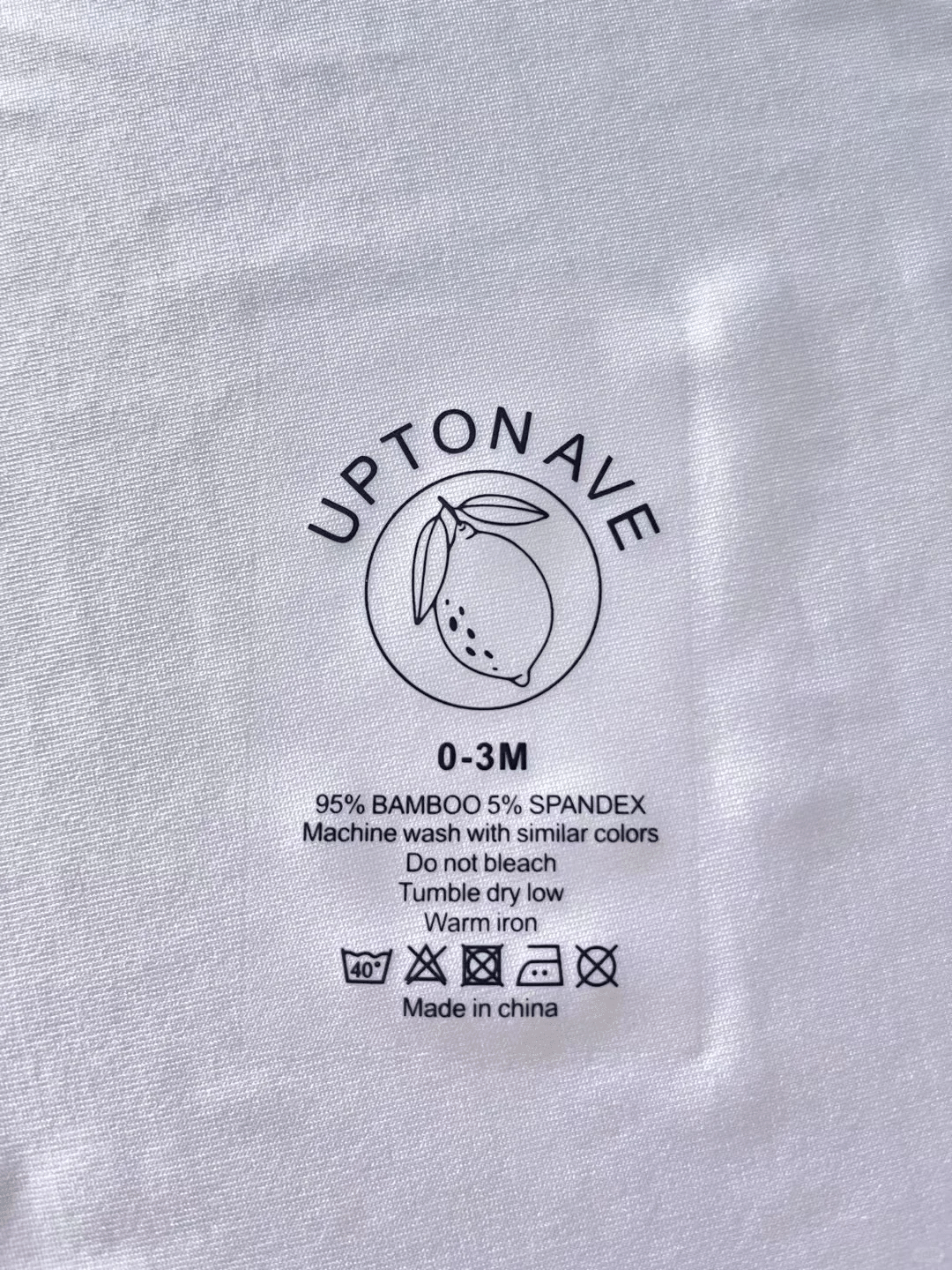
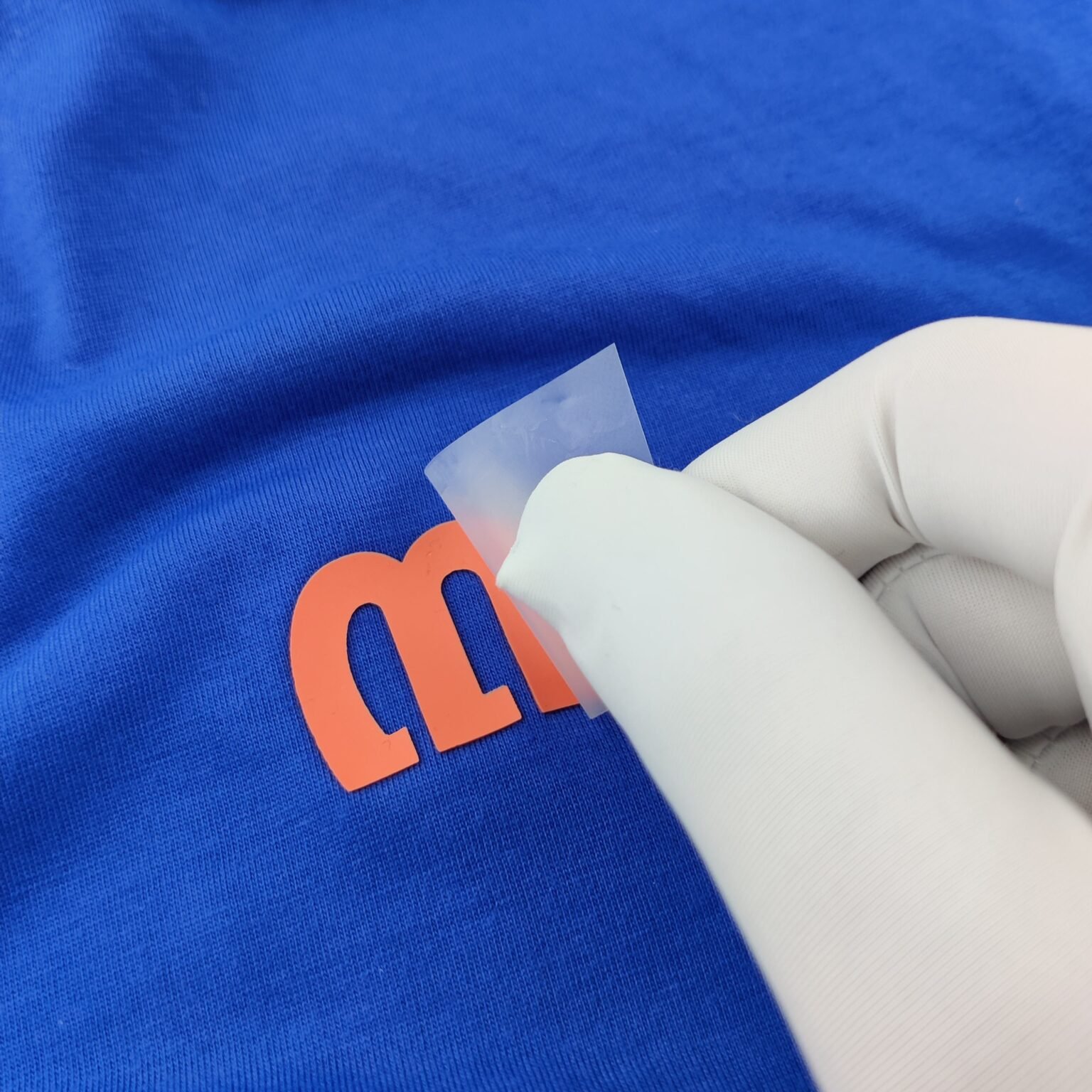
The product behind this switch is the heat transfer label, a key part of Custom Clothing Labels. Using heat and pressure, this technique allows you to place your brand directly on a garment in a way that can be felt but doesn’t irritate the skin. It combines branding with comfort, giving your products a polished, professional finish without compromising wearability.
This guide shares insights drawn from over two decades in the apparel business. We’ll cover how heat transfer labels work and how to choose the right type for your fabric and brand.
At Prime Streetwear Manufacturing, with 10 years in clothing manufacturing, we’ve mastered the use of heat transfer labels and other Custom Clothing Labels. Here, we share what we’ve learned to help you elevate your garments from good to exceptional.
The Anatomy of a Heat Transfer Label: How It Works
Three things balance to make heat transfer work, and a good heat van is the art of balancing them in just the right way: Heat, Pressure & Time. These three elements collaborate together to fasten the label onto the fabric.
What is a label made of? Good heat transfer labels are not just ink. There are a few layers to why it works.
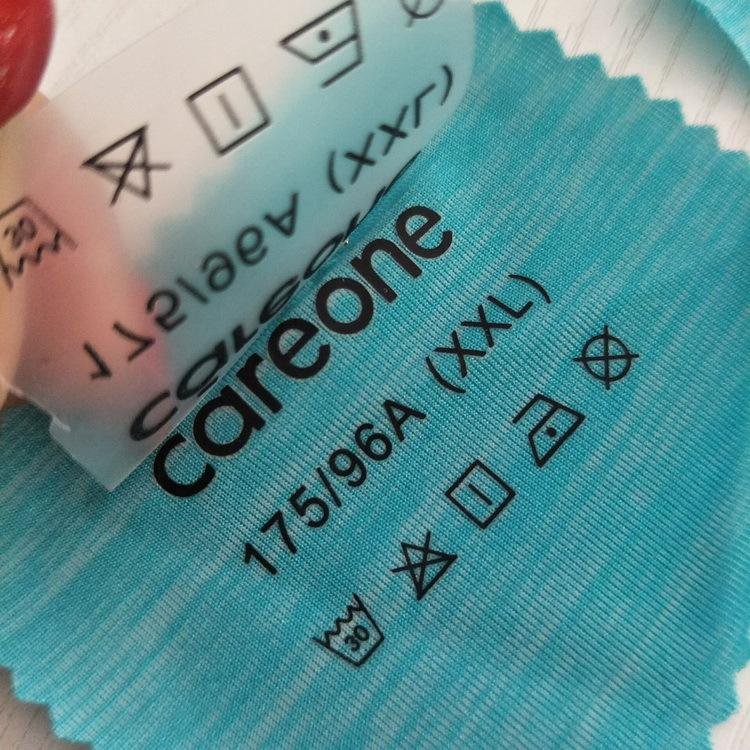
- PET Carrier Film: This is the clear sheet that holds the design. You peel it away after pressing.
- Release Layer: A tiny coating on the film that helps the ink come off cleanly.
- Ink Layer: The part you see—your logo, size, or care instructions. Good ink means bright, lasting designs.
- Adhesive Layer: This is the most important part. It’s a special glue that heats up and sticks the design to the clothes. Different adhesives work on different fabrics.
Unlike a sewn-in tag, a heat transfer label becomes part of the fabric, giving a true “tagless” feel.

Freight discount

Free Full Creative Proof For Approval

Free Digital Mock Ups

Custom packaging
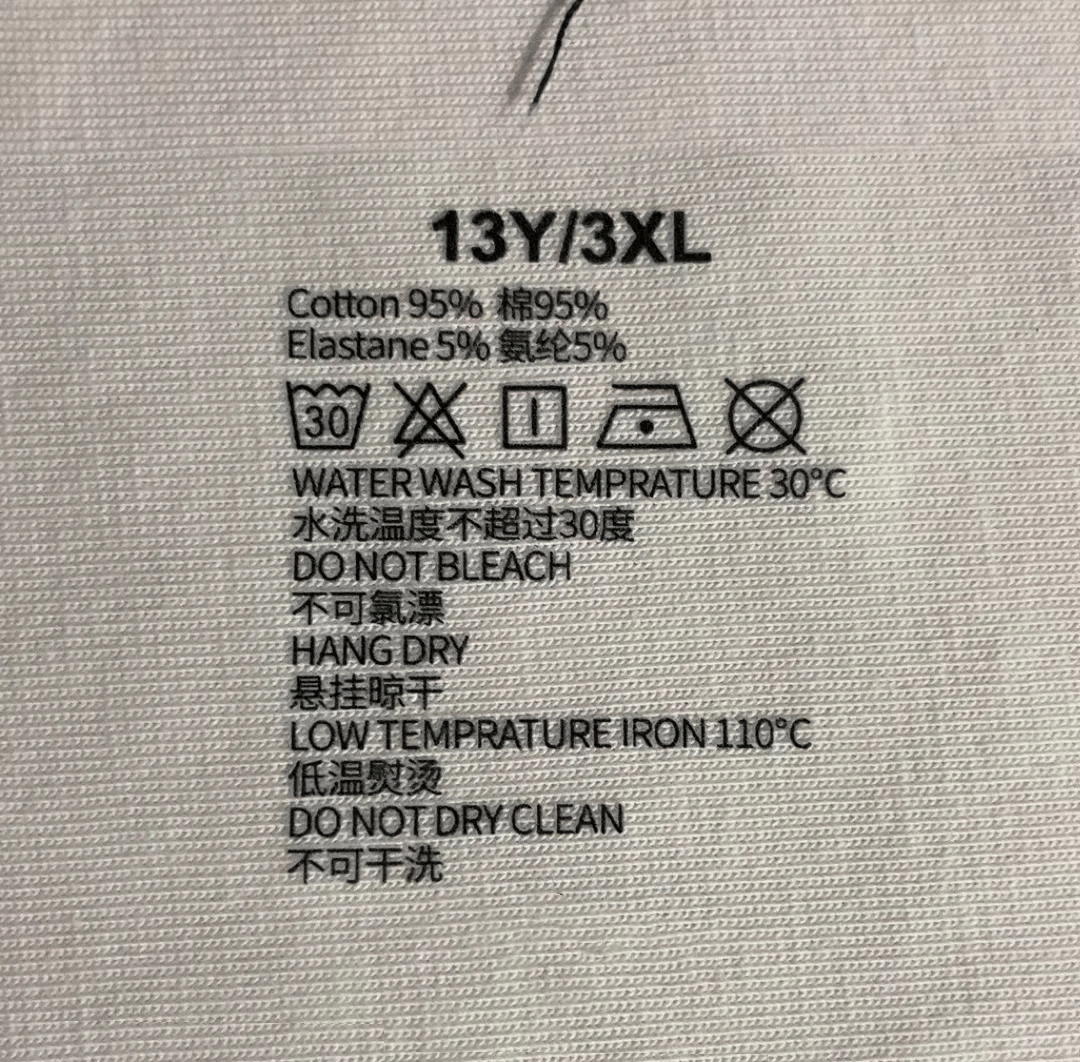
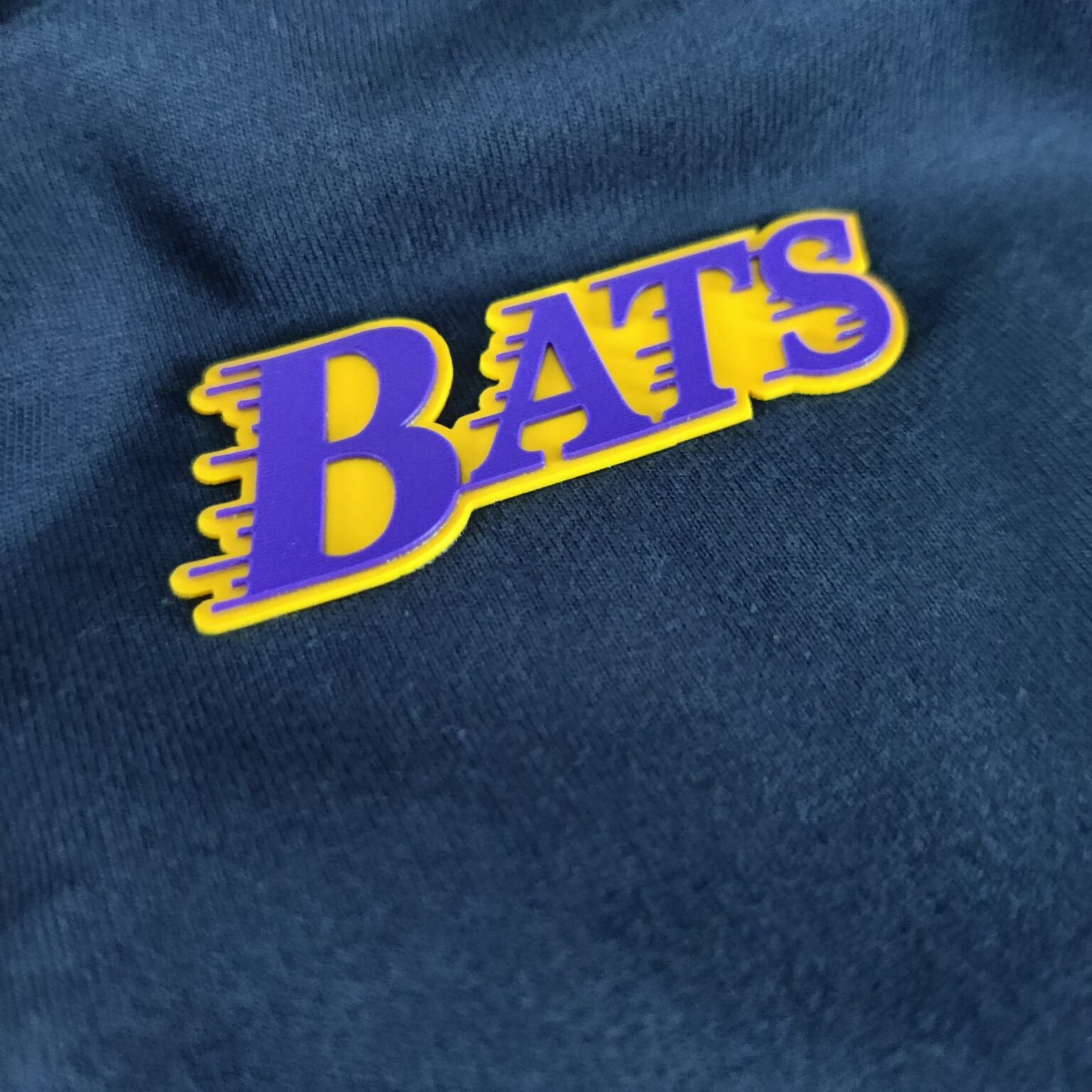
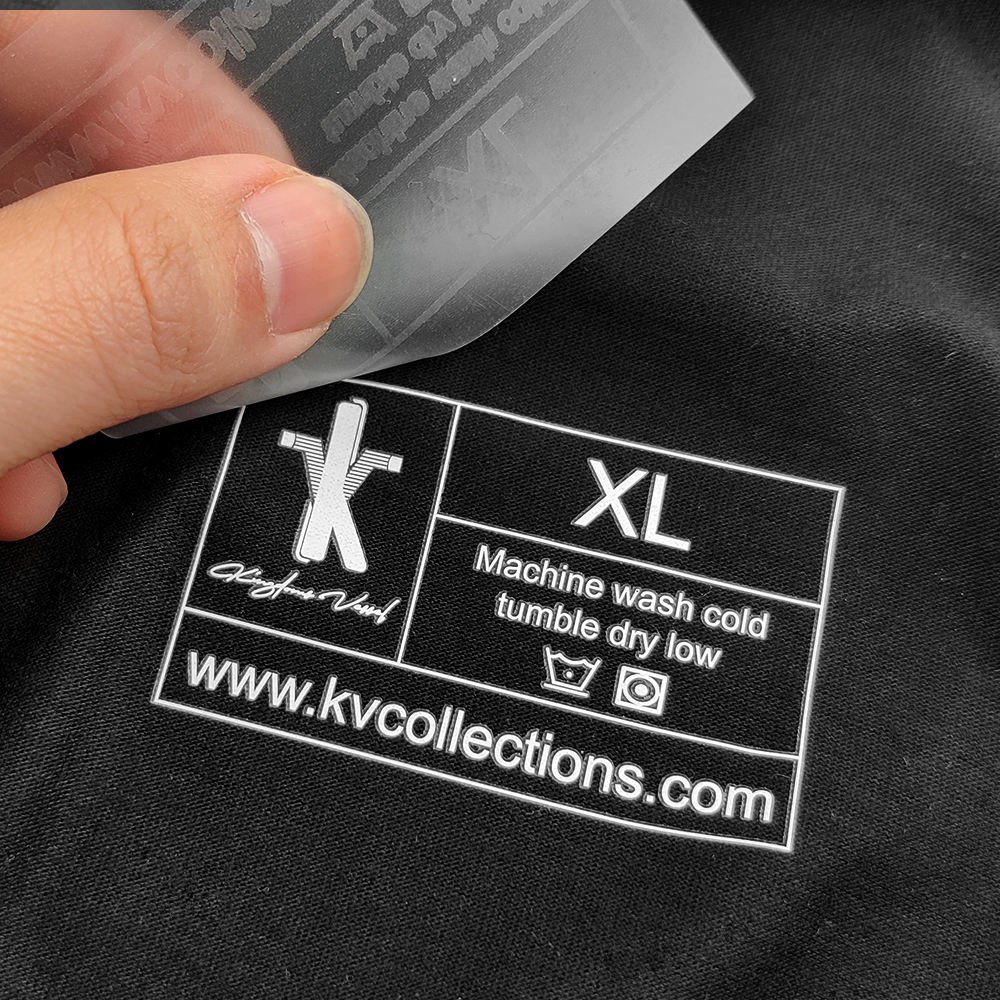
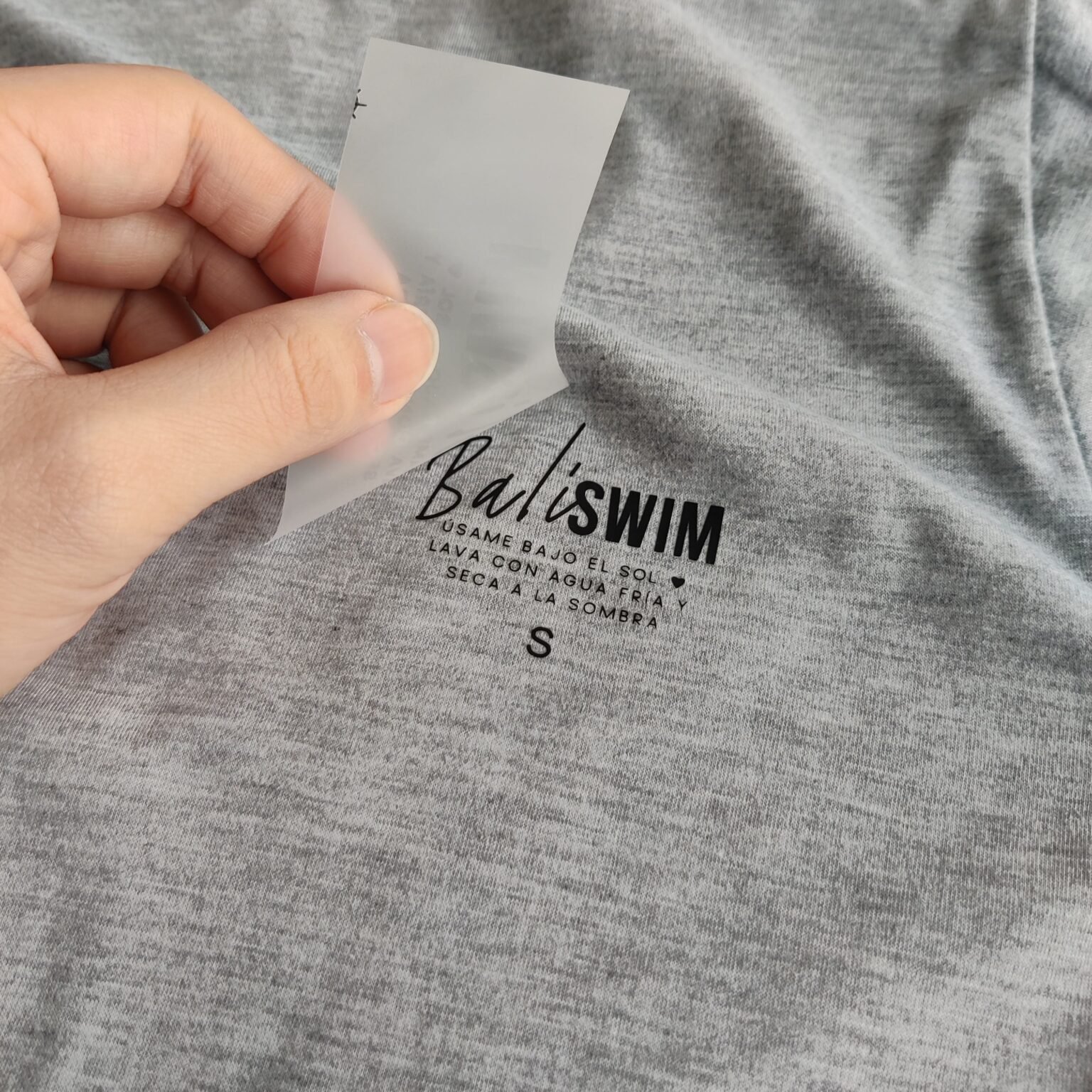
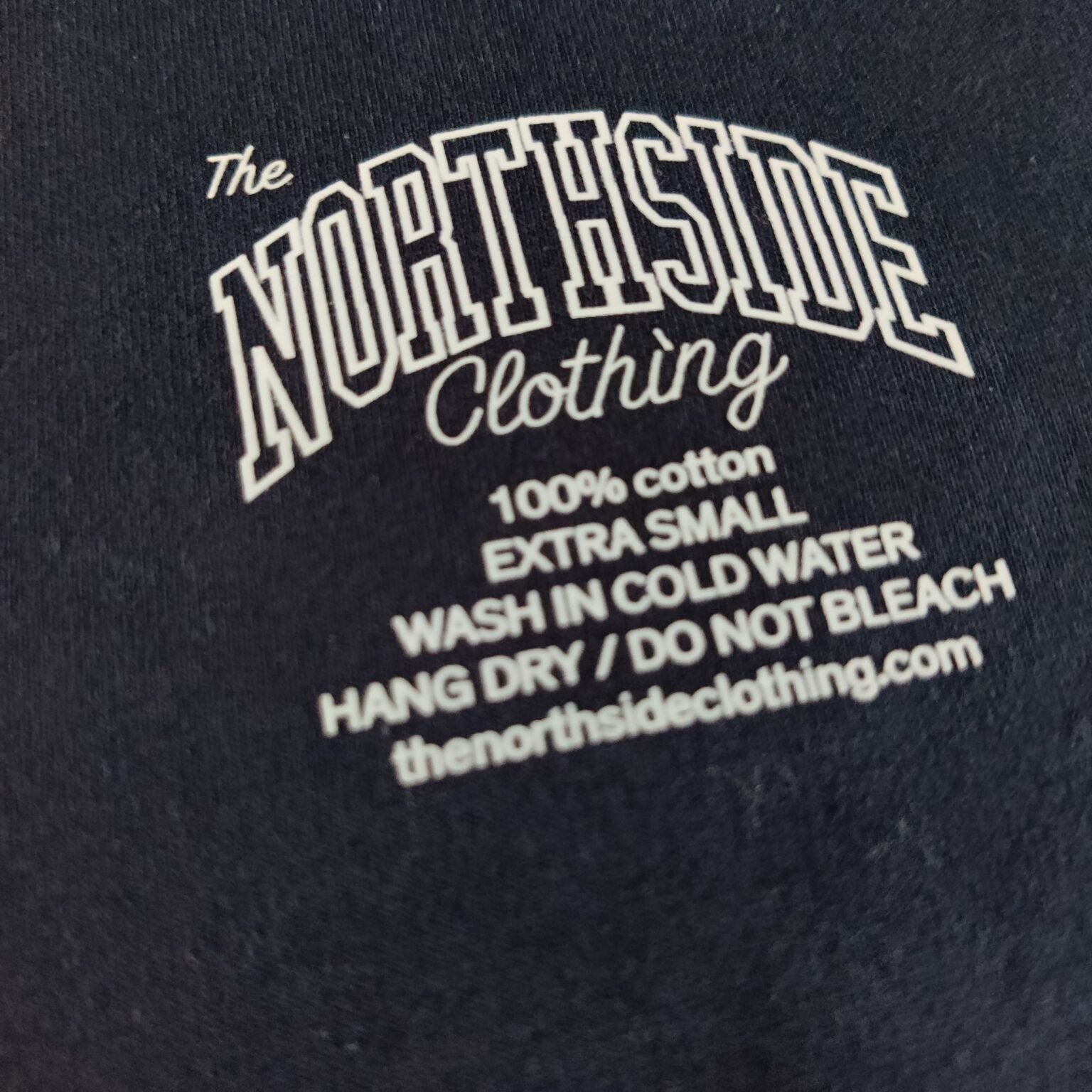
Heat Transfer Label Product Gallery


Pros and Cons: Is a Heat Transfer Label Right for Your Brand?
A heat transfer label has a clean, modern appearance —but it’s not for everyone. You know you want to consider the good and bad in order to make an informed decision. We advise brands on making this decision every single day.
Pros (Advantages) | Cons (Disadvantages) |
Superior Comfort: No actual tag means no scratching, making it perfect for workout clothes, underwear, and kids’ clothes. | Fabric Limitations: Won’t work on heat-sensitive materials or rough fabrics where the glue can’t stick well. |
Clean, Premium Aesthetic: Gives a simple, high-end look that blends with the clothing, making your brand look better. | Application is Key: The quality depends on doing it right. Wrong temperature, pressure, or time will cause problems. |
Fine Detail & Full Color: Can show detailed designs, small text, and full-color images better than sewn labels. | Potential for Opacity Issues: On dark clothes, you might need a white base layer to make colors stand out. |
High Durability: When done right, a good transfer can last through many washes without breaking or fading. | Feel Can Vary: The way it feels ranges from very soft (silicone) to slightly plastic-like (low-quality plastisol). Choosing the right type matters. |
We’ve seen many failures happen because of uneven pressure or not enough heat, which makes the label peel off after a few washes. This shows why professional equipment and know-how matter
Apparel Heat Transfer Label Customization Options: Designed for All Your Branding Needs
For apparel brands, we offer a wide range of custom heat transfer labels designed to meet your specific branding and garment requirements.
With our extensive options in materials, finishes, colors, application techniques, and durability levels, combined with precise craftsmanship and quality control, you can create heat transfer labels that perfectly match your brand vision. From logos and size labels to care instructions and branding marks, every detail can be fully customized.
Our goal is to help you deliver a clean, professional, and long-lasting labeling solution that enhances garment comfort while strengthening brand recognition. Understanding the importance of customization, we, as a heat transfer label manufacturer, provide comprehensive solutions to support all your branding needs — whether for Streetwear, underwear, seamless garments, or fashion apparel.
A Manufacturer's Guide to Heat Transfer Label Types
All heat transfer labels are not created equally. In both cases, there are several different types, each with a distinct feel and best use. Choosing the right one is important to create then best product.
Plastisol Transfers
Plastisol: It’s the workhorse of the industry. Constructed with PVC-based ink, these transfers are budget-friendly and durable as well as adaptable. They are a little thicker than some other varieties, but provide good coverage and bright colors.
- Key Characteristics: Covers dark fabrics well, lasts long, most affordable option.
- Best for: Cotton T-shirts, hoodies, promotional clothes, and basic brand labels.
Silicone Transfers
For high-end and performance garments, silicone is the ideal material. These are made out of a silicone material so its very soft and stretchy, and slightly 3D too. They are material-hugging and therefore, very long-lasting on stretchy fabrics.
- Key Characteristics: Very soft feel, stretches and bounces back, matte or shiny finishes, 3D effect.
- Best for: Athletic wear, swimwear, yoga pants, compression gear, and any stretchy fabric.
For performance oriented athletic brands, we generally recommend silicone transfers because they conform and stretch with the fabric without cracking ensuring that your brand always looks good even through hard play.
Digital & DTF (Direct-to-Film) Transfers
Go with digital when the design is complex. And if you want unlimited colors, gradients, or photo-like images – there are no additional charges per color for digital and DTF transfers. They print onto a film and then transfer – which enables them to hold such insane detail.
- Key Characteristics: Photo-quality, unlimited colors, good for small to medium runs with complex art.
- Best for: Graphic tees with detailed designs, multi-color logos, and custom one-off projects.
Reflective & Specialty Transfers
These shifts are functional and stylistic at once. Reflective labels utilize small glass beads to reflect light, rendering them visible in the dark. You could also make some more niche transfers such as metallic, glitter, or holographic.
- Key Characteristics: High-visibility (reflective), unique looks (metallic, glitter), practical.
Best for: Workout clothes, work uniforms, safety gear, and fashion items where you want to stand out.
Mastering the Application: A Guide to Flawless Results
Optimal Placement Branded Labels are only as good as they look. Creating a permanent bond that holds up to daily washing and drying takes precision — and the proper tools.
To start, you need a quality heat press. An in home iron can’t give you the even pressure and consistent heat necessary for the adhesive to be set correctly. That way the entire label is treated, with no weak spots that might cause it to fray.
The Golden Triangle also applies here: Time, Temperature and Pressure. And each transfer and fabric requires its own formula. Typical settings for a plastisol transfer onto cotton would be an application of 160 °C (320 *F) for 10 seconds using a medium pressure, whereas the same type of transfer on nylon at the same time and pressure would require less heat. We must follow the supplier instructions.
Basic Heat Press Application Steps:
- Pre-press the Garment: Press the clothing for 3-5 seconds to remove moisture and wrinkles, creating a flat surface.
- Position the Transfer: Carefully place the label on the garment, design side down. Use heat-resistant tape if needed to hold it in place.
- Press: Close the press for the right time, temperature, and pressure.
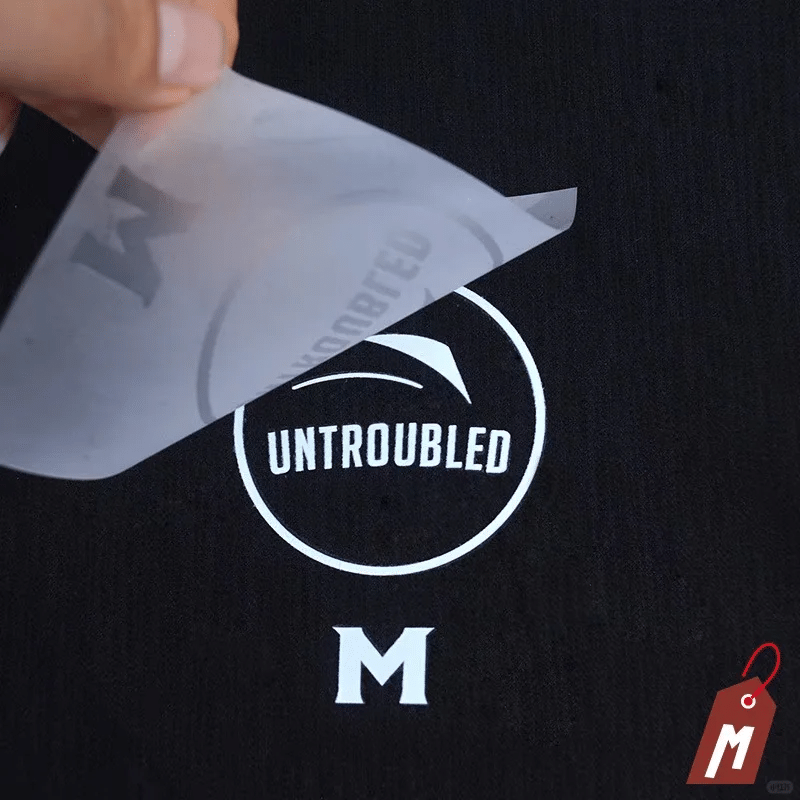
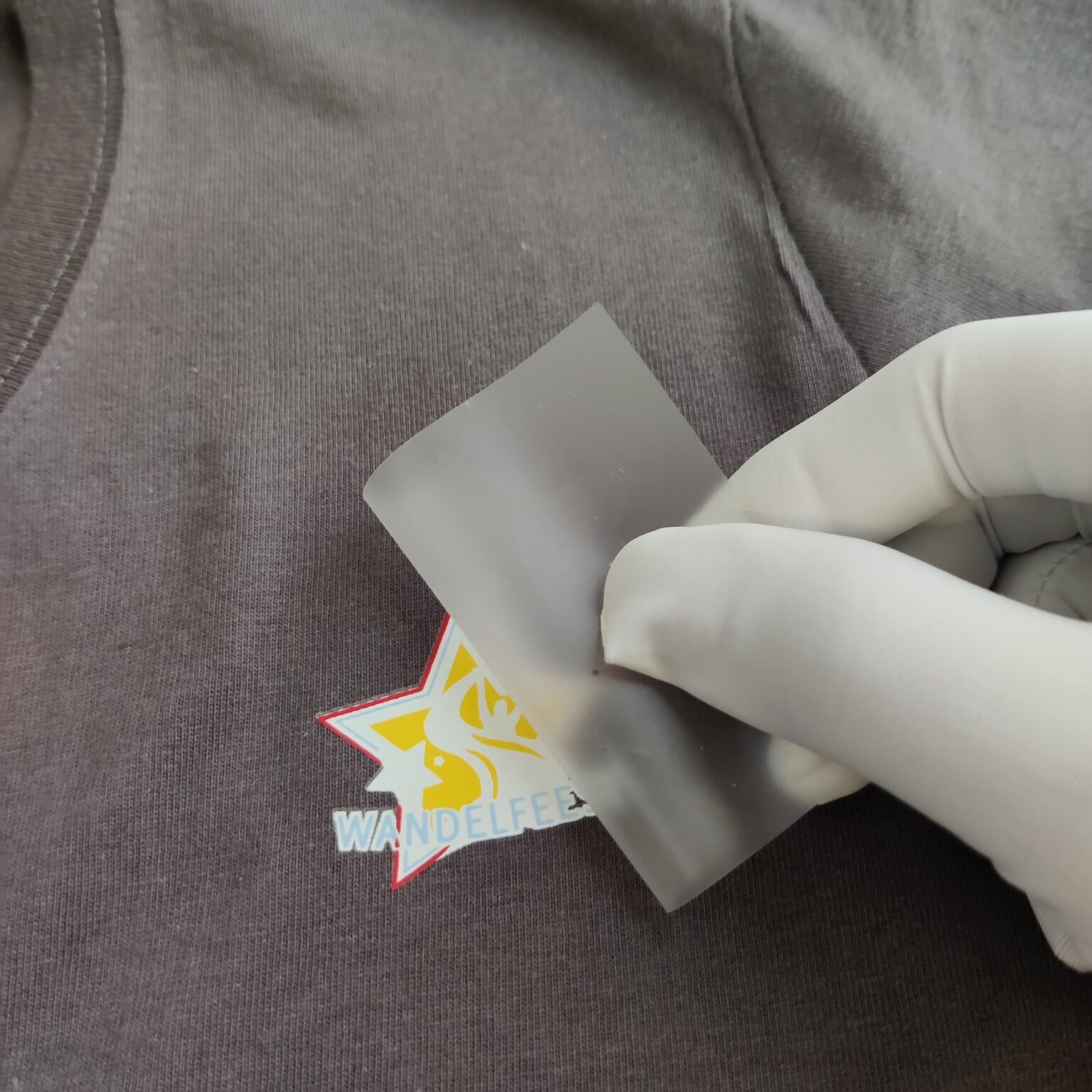
- Peel: Open the press and pull the PET carrier film away. This can be a “hot peel” (right away) or “cold peel” (after cooling), depending on the transfer’s instructions.
Artwork Preparation for Professionals
Perfect results start with perfect files. To make sure your design looks good on fabric, your artwork must be prepared properly.
We always tell our clients to provide vector artwork. For sharp, clean edges, vector format is crucial. If you’re new to this, learning the difference between vector and raster files is the first step toward professional quality. Vector files (.AI, .PDF, .EPS) can be made larger or smaller without losing quality, keeping your logo crisp at any size.
Also, consider using Pantone (PMS) colors to keep your brand colors the same across all products. Finally, watch out for very thin lines; details that are too small may not have enough ink or adhesive to transfer properly.
Fabric Compatibility: The Ultimate Litmus Test
The last major thing needed to cause any heat transfer label sticker to become functional is fabric compatibility. The
Choosing the right label starts with understanding the properties of your chosen apparel fabrics, as this determines what adhesive and application process you need.
Ideal Fabrics:
- Cotton & Cotton Blends: These are the most stable and easiest fabrics for heat transfers. The natural fibers provide a great surface for adhesives to stick to.
- Polyester: Also excellent for transfers. However, you must use labels with special adhesives at lower temperatures to prevent “dye migration,” where the fabric’s color bleeds into the label.
Challenging but Possible Fabrics (Requires Special Transfers):
- Spandex/Lycra Blends: These stretchy fabrics need an equally flexible label. Silicone or special high-stretch plastisol transfers are necessary to prevent cracking.
- Nylon & Tri-blends: These materials are often sensitive to heat and may have coatings. They need special low-temperature adhesives to prevent the fabric from melting or getting shiny spots.
Fabrics to Avoid:
- Heavily Textured Fabrics: Materials like rough knits, wide-ribbed fabric, or terry cloth don’t provide a smooth surface for the adhesive to stick to, leading to a weak bond and likely failure.
Heat-Sensitive Materials: Some delicate synthetics, vinyl, or waterproof-coated materials can’t handle the heat needed for application and may get damaged.
Partner with an Expert: Your Key to Durable, High-Quality Heat Transfer Labels
Heat transfer labels are not something you can learn about overnight – either the materials or application techniques. The latter scenario can cause peeling, damaged clothes and damage to your brand’s reputation. But such success requires the right manufacturer.
With 10 years experience in apparel manufacturing, we understand that a label is not just a label – it’s the finishing touch to your brand’s quality commitment. It seems to say in a quite voice thank you for the comfort and detail.
We not only slap labels on, but we solve problems. That is why it’s our job to have a conversation with you about your design, look at the fabric that will be employed and consider where you are positioned in the market before facilitating an expert recommendation on which heat transfer label type and process – one that appeals to your target demographic as well and stands up over time. Below We include heat transfer applications as part of our broader custom clothing craftsmanship services, ensuring perfect results every time.
Don’t leave your brand’s finishing touch to chance.
Ready to improve your brand with premium tagless labels? Let our experience guide you.
Contact us today:
- Direct Email: info@primestreetwearmfg.com
- Phone/WhatsApp: +923158183215
Real feedback from customers all over the world about
Prime Streetwear Manufacturing.
Communication & Production
How to Start Working with Prime Streetwear Manufacturing?
3X Your order is triple checked by our team prior to production and before shipment
Request a Free Quote & Consultation
Hit us up for a free quote. We’ll discuss your requirements — design, quantity, timing — and put a plan in place that works.
Submit Your Custom Design & Requirements
1. Choosing Label Design
2. Selecting the right Carft for the design
3. Payment for samples
4. Sample production after determining the color, size, and accessories of the sample
Receive Sample Prototypes for Approval
1. Are the fabrics satisfactory?
2. Does the craftsmanship live up to the design?
3. Are there any changes that need to be made to the colors, sizes, and accessories?
4. Details of large orders
Bulk Production & Delivery Process
1. Payment of deposit for large orders
2. Large Order Production Progress Inquiry
3. Final payment upon completion of prodution
4. Choose the right shipping method, pay the shipping fee, ship the goods
Frequently Asked Questions
What exactly is a heat transfer label and how does it work?
A heat transfer label uses heat, pressure, and time to apply branding directly onto clothing without sewing. It consists of multiple layers including PET carrier film, release layer, ink layer, and adhesive that bonds with the fabric to create a tagless feel.
Which fabrics work best with heat transfer labels?
Cotton and cotton blends are ideal for heat transfer labels, followed by polyester (using special adhesives). Spandex/Lycra blends require flexible labels like silicone transfers, while heavily textured fabrics should be avoided.
What are the main types of heat transfer labels available in 2026?
The main types include plastisol transfers (affordable and durable), silicone transfers (soft and stretchy), digital/DTF transfers (for complex designs), and specialty transfers (reflective, metallic, holographic).
Why are heat transfer labels better than traditional sewn tags?
Heat transfer labels offer superior comfort (no scratching), a cleaner premium aesthetic, ability to show fine details and full color, and high durability when properly applied. They’re ideal for workout clothes, underwear, and children’s apparel.
What equipment is needed to apply heat transfer labels correctly?
Professional heat press equipment is essential for proper application, as it provides even pressure and steady heat. Home irons cannot deliver the precision needed for permanent bonding that lasts through multiple washes.
Heat Transfer Label Manufacturer Offer
Prime Streetwear Heat Transfer Label Manufacturer was created to provide helpful service, simple streamlined ordering & eco-friendly options. A company with transparent prices & ethics, a company that aims to create good things.
Prime Streetwear Manufacturing Difference
Prime Streetwear Manufacturing was created, to provide helpful service, simple streamlined ordering & eco-friendly options. A company with transparent prices & ethics, a company who aims to create good things.
Innovative Ideas
Prime Streetwear Manufacturing is proud to be a leading partner in the promotional products + fashion industry. With unique ideas + out of the box printing methods.
We Stand Behind Our Work
Our main goal is to provide peace of mind so you can relax and have confidence that your job will come out exactly as you had imagined.
Quality Over Quantity
Prime Streetwear Manufacturing believes in quality over quantity and we want our customers to feel the same way.
Dedicated Reps
Each account receives a dedicated rep who can be reached face to face by phone or via e-mail.
Long Lasting Relationships
We value all of our clients and aim to solidify long lasting & mutually beneficial relationships.